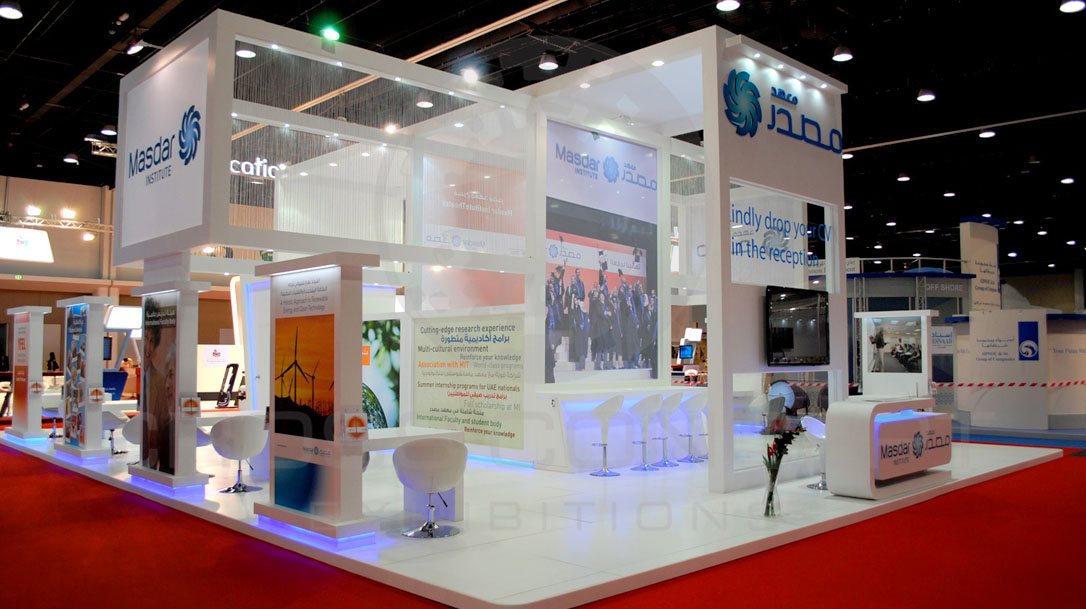

When organisers sell floor space, the number of sides open to an aisle matters as much as the square metres. It decides where visitors walk in, where your walls and storage go, and how much structure the stand needs.
The four standard spaces
| Space | Open sides | Best for |
|---|---|---|
| Inline | One | Focused product displays and smaller budgets. Two side walls and a back wall give plenty of graphic space. |
| Corner | Two | Catching traffic from two aisles. A good balance of visibility and wall space for storage. |
| Peninsula | Three | Brands that want presence without the cost of a full island. One back wall carries the main graphic. |
| Island | Four | Flagship stands. Visible from every direction, with room for meeting areas, hanging signs or a second level. |
More open sides, more traffic
Every open side is another way in. An island draws visitors from all four aisles, while an inline stand relies on people walking along one. That is why islands and peninsulas sit at the ends of halls and near entrances, and why they cost more per square metre.
How the type shapes the layout
Closed sides are where storage, a kitchen and tall graphics go. With fewer walls, those have to be built into the middle of the stand, which takes space and structure. On an island, a central core often holds storage and the main brand graphic, with open areas around it.
Most organisers limit wall height along open sides, so visitors can see across the hall. Check the height rules in the exhibitor manual before you fall in love with a design.
What it means for budget
For the same floor area, an island usually needs more build than an inline stand: more finished surfaces, freestanding structure and often rigging. Budget scales with size and type first, then with materials, AV such as LED walls, and the city, since freight and crew travel are part of the build.
How to choose
- Start from what the stand has to do: launch a product, book meetings or pull a crowd off the main aisle.
- Look at the floor plan for where visitors enter the hall and which aisles will be busiest.
- If meetings matter more than footfall, a corner with a closed meeting room can outperform an island.